Connects the pathway
Connects collection, sorting, processing and reporting so every hand-off can be followed in one operating view.
Know every material. Maximise every resource.
ēkotrace is the evidence and operating layer that connects collection → sorting → processing → reporting. It preserves identity in one reviewable, evidence-bound thread from hand-offs → evidence → methods → outcomes. Built for bounded pilots, it gives teams a credible record to review before a pathway is ready to scale.
Connects collection, sorting, processing and reporting so every hand-off can be followed in one operating view.
Keeps hand-offs, evidence, methods and outcomes together in one reviewable, evidence-bound thread.
Turns recorded material movements into cited carbon calculations, Materials Statements and reports people can review.
Textile-first circular evidence is where ēkotrace starts: a defined feedstock, a named hand-off, a documented sorting and processing method, and an outcome someone else can review.
Other material streams remain exploratory until a feedstock, partner pathway, evidence boundary and intended outcome are agreed.
Reviewable records and cited assumptions for discussion with retailers, brands, councils and their independent reviewers.
Every event is linked into a reviewable record in production — not on a roadmap.
Anyone can check the linked record, no account required.
MfE 2025 emission factors, source-cited on every figure.
Sub-processors, data flows and status published openly.
Begin with reviewable, hash-linked records and clearly stated calculation assumptions. Independent review, physical custody evidence and any required assurance or certification must be established separately. Start with a 30-day waste audit to scope the evidence a future pilot would need.
ēkotrace records the evidence. ēkotrace to Community connects people, households, op shops and organisations to practical pathways, learning and pilot conversations.
For organisations
Chain of custody, material provenance and reporting for pilots and operations.
You are here →For people, op shops and connectors
Find a household pathway, explore shared-value partner access, host local action or connect a decision-maker to a pilot.
Explore Community →"Material intelligence can guide a decision. Reviewable evidence shows what happened next — that is the layer ēkotrace exists to build."
— ēkot Circular Solutions Ltd, 2026
Every ēkotrace ledger record is linked in a tamper-evident hash chain. Paste a ticket ID and the verifier recomputes the recorded links. This confirms record integrity only, not the physical material, custody or outcome.
No ID handy? — a real 42.5 kg soft-plastics deposit on the production ledger.
Full verifier with record journey at ekotrace — /verify
Textiles remain the primary proof stream. Explore the evidence context for textiles, then see which other streams are still exploratory.
Textiles are the fastest-tightening compliance frontier — the EU is legislating traceability into the supply chain.
Fashion runs on volume, and most of that volume ends its life untracked. Globally, an estimated 92 million tonnes of textile waste is generated every year, and the dominant destinations are still landfill and incineration. Regulators are responding: the EU’s textile strategy and Digital Product Passport will require brands to evidence what happens to their products and offcuts. In New Zealand, around 107,000 tonnes of textiles go to landfill each year — 78% of all textile waste — while the retailers sending it face growing ESG disclosure expectations. The problem isn’t only the waste; it’s that almost none of its fate can currently be independently verified.
Published figures and indicators from the cited sources; methodologies, scopes and reference years vary by region. The figures provide context only and do not establish a live ēkot material pathway, partner or processing facility.
This index collects possible design references, policy context and input sources. Pick a region to filter the list; this is not a standards gap assessment or a determination of which rules apply to your organisation.
Status labels describe how ēkotrace uses each source: reference, input, or policy context. They indicate design intent only — not certification, compliance, endorsement, or legal advice. Open each source directly.
The screens below are live captures from the demo environment. The full platform sits behind authentication because it processes commercial-confidential client data — request access via connection@ekot.nz.
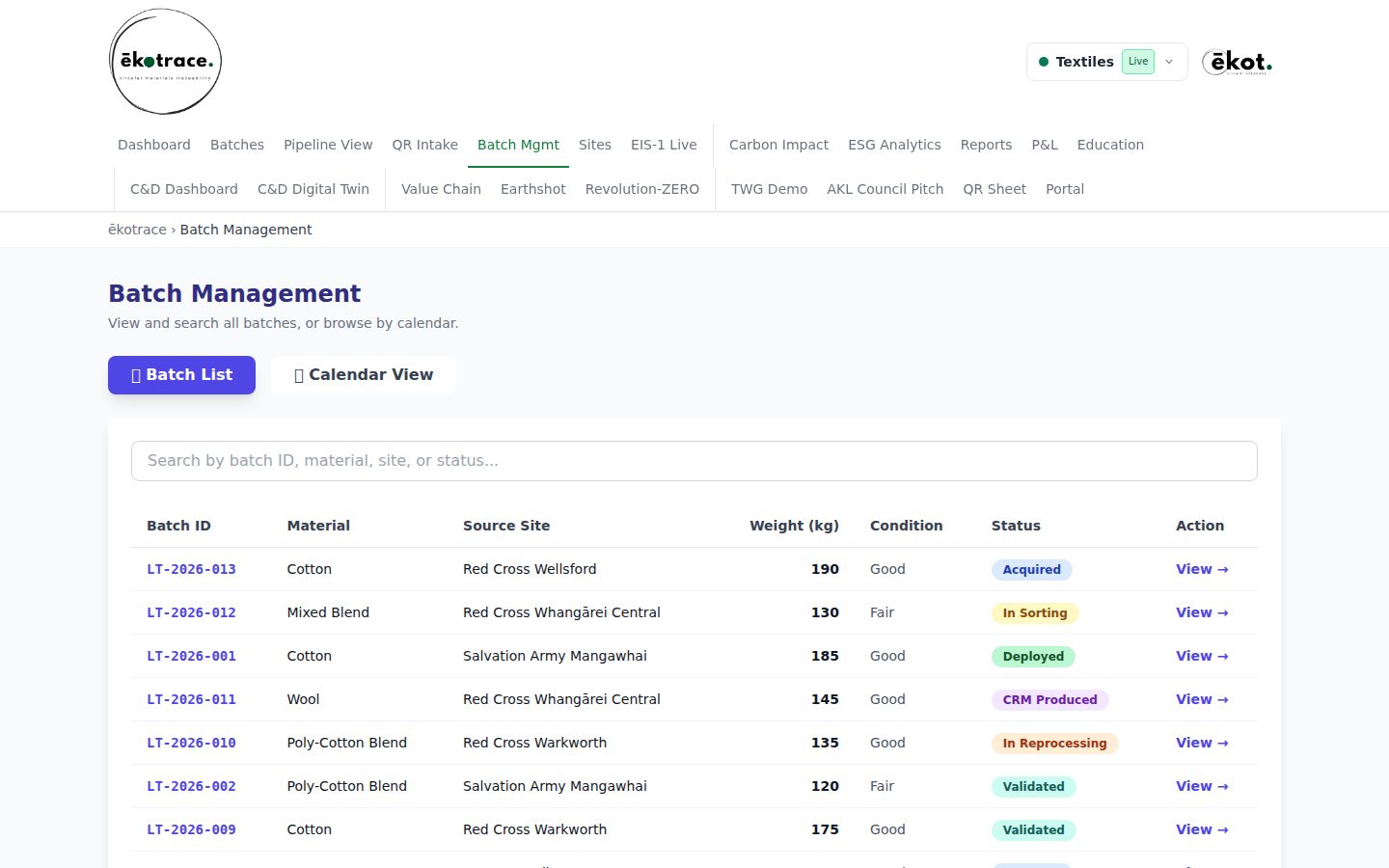
Per-batch chain of custody · fibre composition · recycled content · recorded diversion.
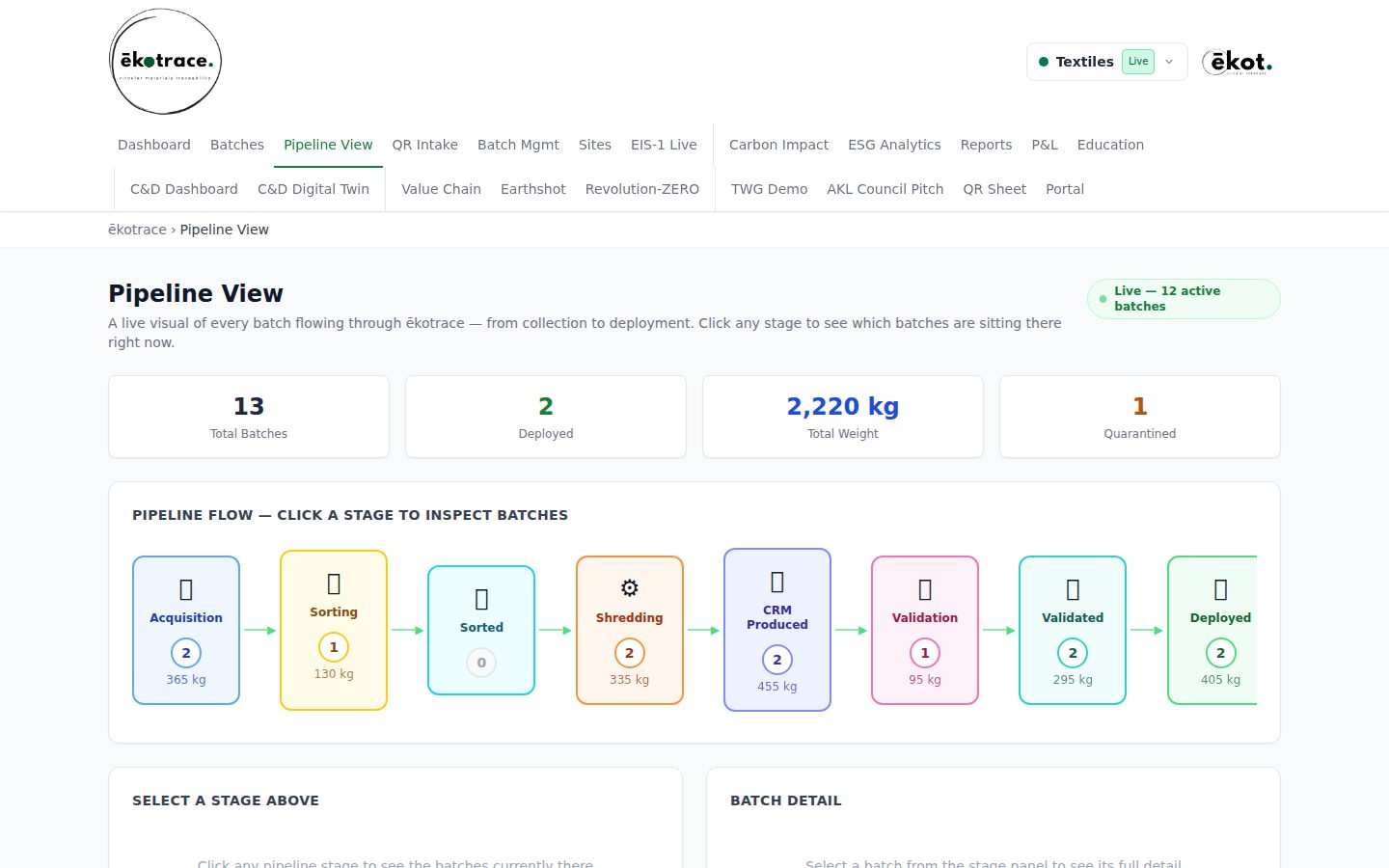
Real-time view from collection through sort, reprocess, CRM and deployment.
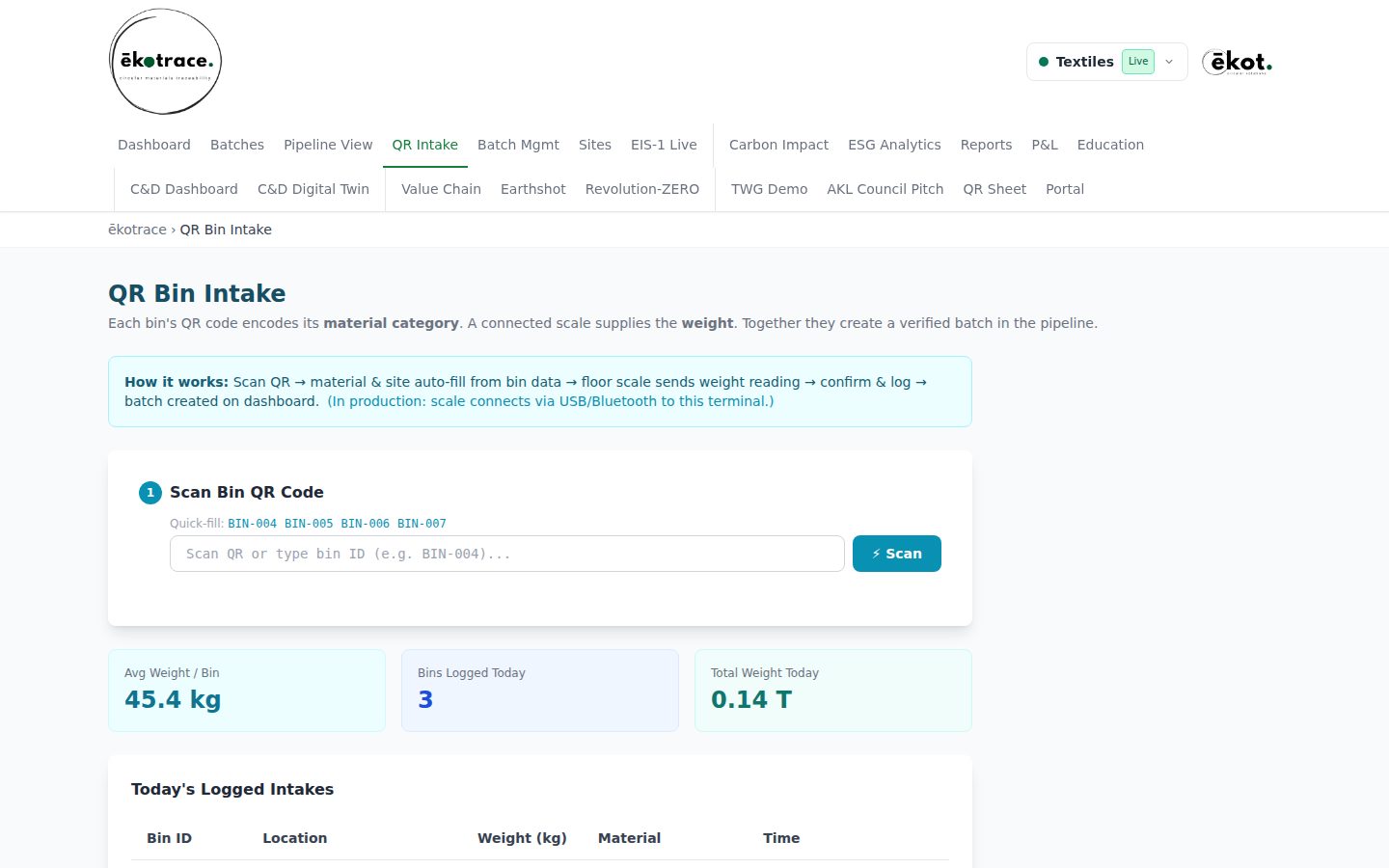
Donor and depot capture interface · per-item provenance from the first scan.
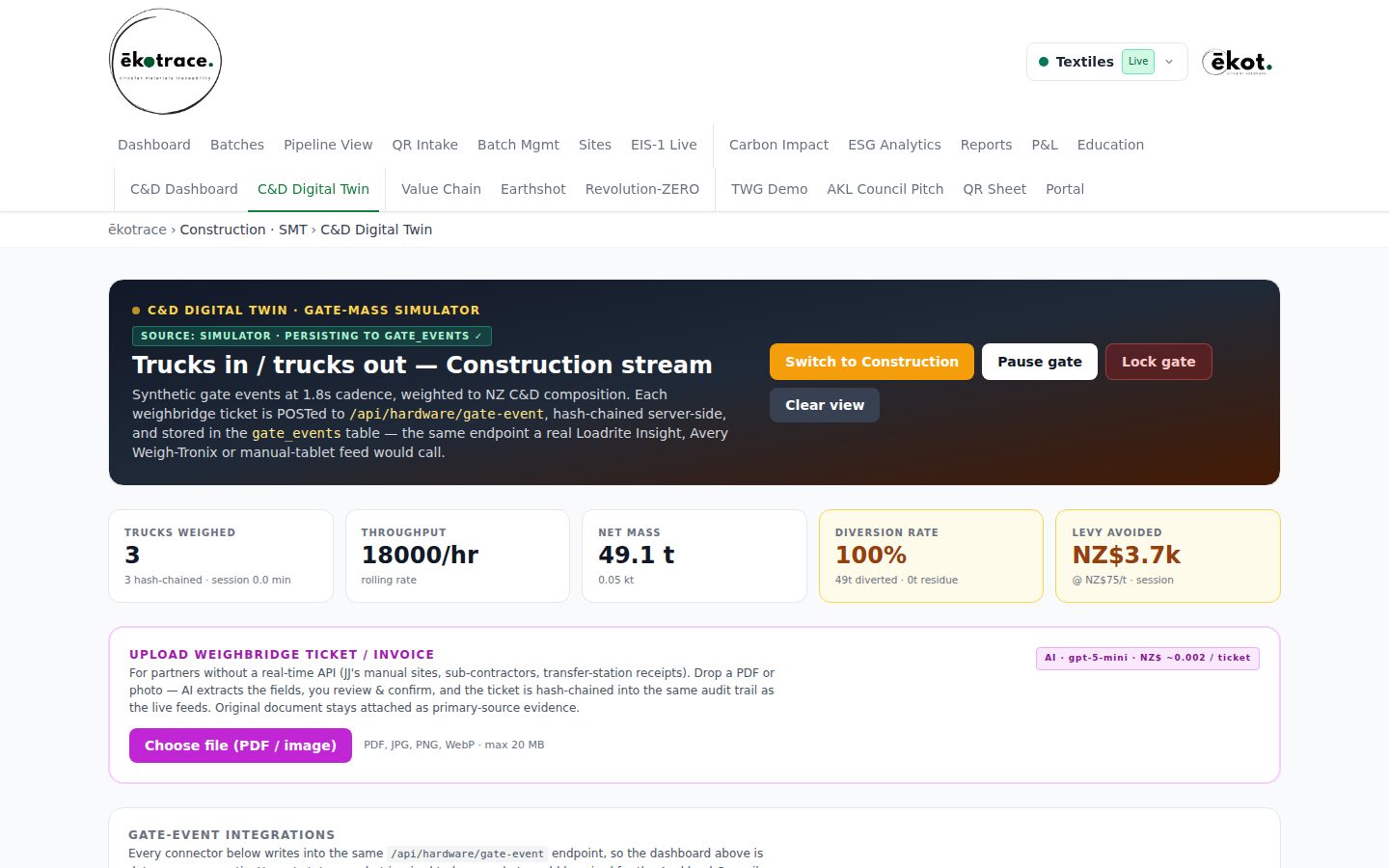
Trucks-in / trucks-out gate-mass simulator · AI weighbridge-ticket OCR · tamper-evident record chain.
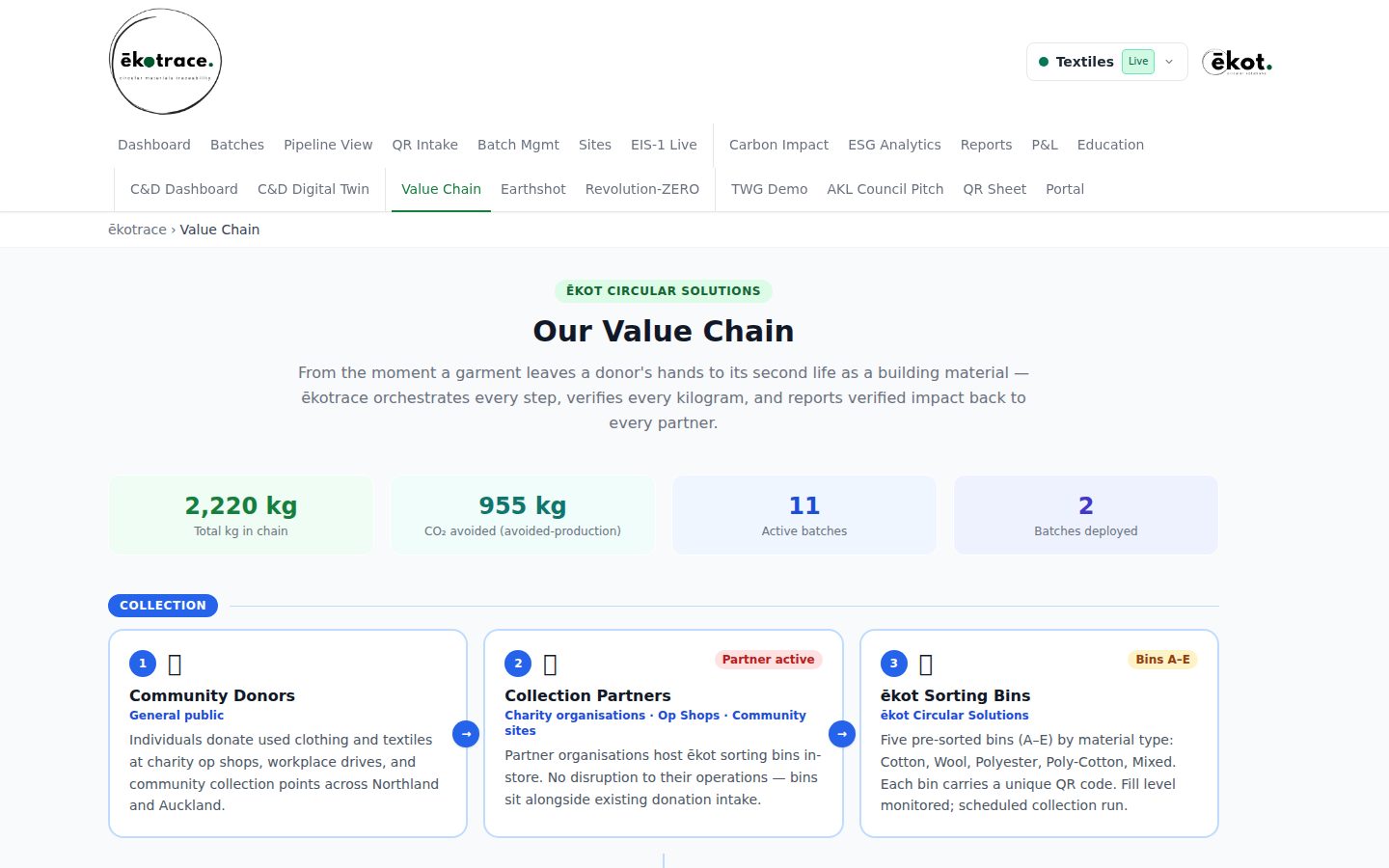
Stakeholders, material flows and revenue points across the circular textile economy.
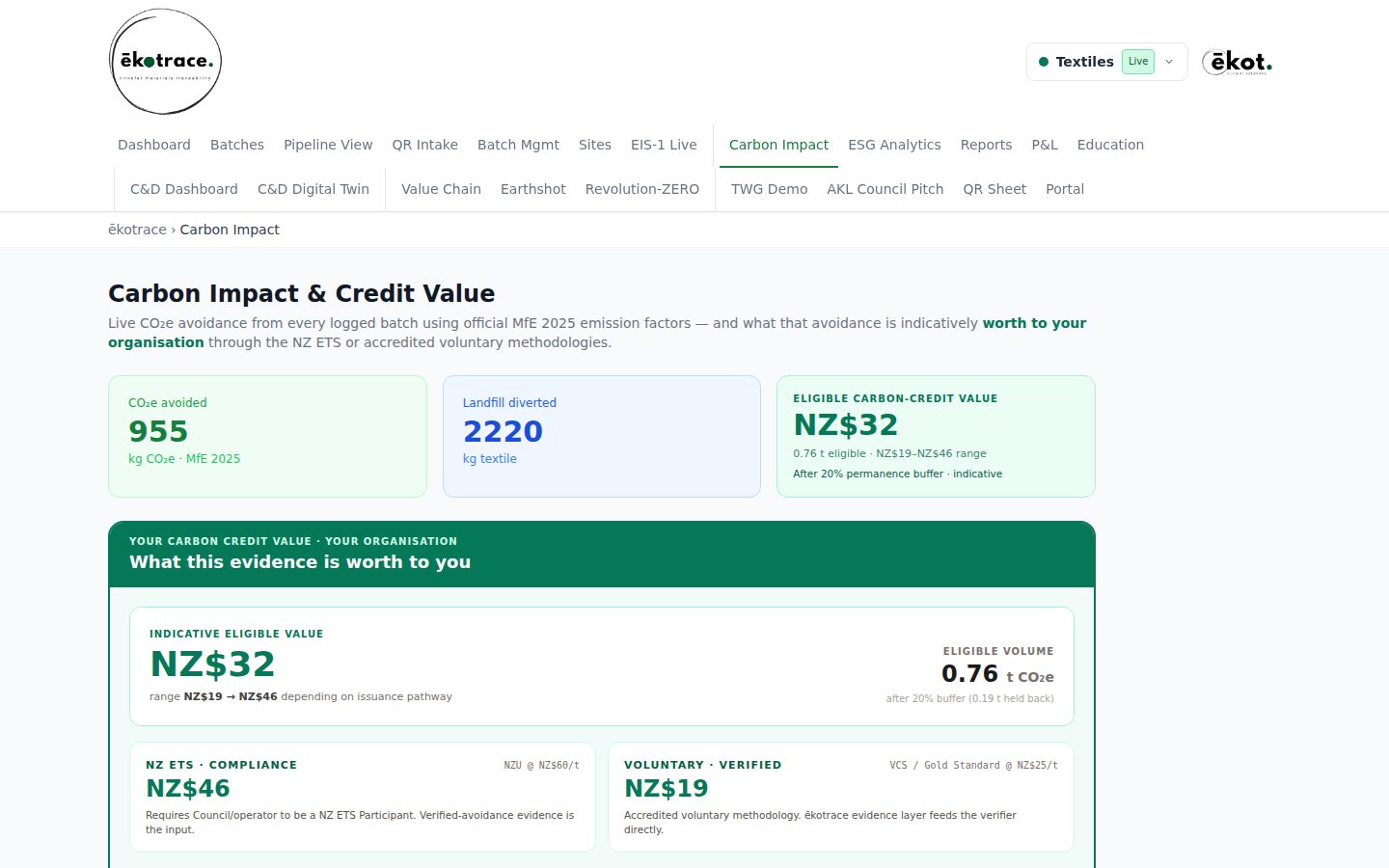
Indicative avoided-emissions estimates · uses a cited MfE 2025 factor.
The rest of the ēkotrace platform sits behind authentication (it processes commercial-confidential client data). These pages are public so that reviewers, procurement teams and regulators can verify our posture without an account.
Pilots, partnerships, procurement reviews, investment conversations. Get in touch with the ēkot team.
connection@ekot.nz